My first blog post

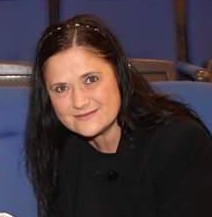
This is my 24th day in New Zealand and my first blog. It's been an emotional rollercoaster. But let me tell you about my journey so far.....

I started teaching in South Africa in 1998. I gained heaps of experiences working with multi cultural classes. In 2000, I met my wonderful husband, also a teacher, and we have worked alongside each other since 2002.

In 2005, we decided that we needed a change in our lives. Something more, challenging. We moved to Taiwan and taught English as a second language at a private school. We missed our family and went back to South Africa in 2008. We bought a doggy Parlour and worked for another 4 years at the same school.
We have two sons, 8 and 4 years old. As all parents, we wanted to give our kids everything and the best opportunities there might be. Knowing how the system works in Taiwan, we decided to uproot our family and moved back to Taiwan. Our kids are fluent in Mandarin Chinese and had the awesome opportunity the experience and be submerged in a another culture.

Now to further our journey, we explored the idea of moving to either Australia, Canada or New Zealand. After months of research and finding the best fit for our family, we started the process immigrating permanently to New Zealand.

My husband and oldest son will arrive on Sunday September 2nd. It's been the most challenging month of my entire life. I don't think I have ever cried so much. Without my husband and my oldest son, was heartbreaking. Setting up a new life from scratch without the support of family was daunting. But looking back this has made me stronger on so many levels. I strongly feel that my Saviour will never put something in my way that I can not handle.

I have met amazing people who have helped, supported, offered a glass of wine, hugged and wiped my tears. With that I have found my "family" in New Zealand.

Regarding my experience as a teacher, after 20 years of working in multi cultural classes and in two different countries, I thought before I started working: "I got this! I'm a good, caring teacher. What could go wrong?" Now this was an eye opener.
New curriculum, new teachers, new class, new set up, new way of teaching, freedom to do whatever. What a shock to my system.
With the knowledge of 20 years of teaching, I felt like an incompetent teacher.
My school has been awesome. there is no lack of support, freedom to find myself in this new system. I looked at myself in thousands of new ways. Exploring what can I do to better myself in this new, weird and scary environment. Slowly I gained confidence to be me and the rest will follow. With the help of my wonderful team and my mentor, our deputy principal I can say with confidence: "I can do this!"

When my husband and son arrive, everything will fall into place.......


Comments

  1. Hi Tania,

    Reading this blog post brought tears to my eyes and made me smile at the same time. You are such a well accomplished person and an educator. I am delighted to be working along side of you at Glen Taylor.
    Arohanui
    Manpreet

    ReplyDelete

Post a Comment

Popular posts from this blog

The Syntax Project - NZ version that aligns with our curriculum

I found this on Facebook this morning. I am so excited to share this amazing resource with teachers  This was the message by Sarah Peck on the Primary teachers page: Kia ora koutou, not sure how many of you use the Syntax Project for a sentence-level writing resource but here is the scope and sequence with NZ Year level equivalents added. All of the slideshow resources that support the scope and sequence can be found at https://ochre.org.au/ac/the-grammar-project/. You will need to register for (free) access. The materials are designed for NZ Year 0 (NE) to Year 7, however I think if you have older struggling learners that still need sentence level writing teaching, learning, review and practice then you'd potentially still get a lot out of what's on offer. The Syntax Project work has been developed by Australian teachers, for teachers, and is underpinned by work from The Writing Revolution, and the Morphology Project references William Van Cleave's work. Here is the link: ...

Impressive Writing Growth with The Syntax Project

I’ve seen remarkable progress in my students’ writing skills since introducing The Syntax Project . This free, accessible platform, grounded in the concept of colourful semantics, has been a game-changer for our young learners. What is Colourful Semantics? Colourful semantics is a method that breaks sentences down into parts, each represented by a different colour. For instance, the "Who" (subject) could be one colour, while "What doing" (the verb) is another. This visual approach makes sentence building more straightforward and fun for children, helping them better understand sentence structure. It’s especially useful for younger students as they get to grips with the basics of grammar and sentence creation. My Approach to Using the Syntax Project I began using the Syntax Project by focusing on oral exercises. Students first talk through sentences, identifying key parts like who is doing what, and where it’s happening. This has laid a strong foundation for understa...

Helping Our Tamariki with b/d Confusion: Strategies That Work

As part of my ongoing teaching inquiry into how we support early literacy—especially for those tamariki who need a bit more time—I came across this really helpful article from All About Learning Press that offers clear, simple strategies to help children who confuse b and d. Let’s be honest—this is super common and very normal for our 5- and 6-year-olds. But for some, it sticks around longer and can start to impact confidence, writing fluency, and reading accuracy. What’s in the Article? The blog post outlines: Why letter reversals are a developmental stage, not a sign of dyslexia on their own. Fun, hands-on strategies to help children lock in correct b/d formation. Practical tools that both ECE and NE teachers can easily integrate into their day. One of my favourites from the list is the “bed” trick—using both hands to form the shape of a bed (with thumbs up) to remind kids that b comes before d. It's kinaesthetic, memorable, and easy to teach. Another great one is using visual m...