Showing posts with label LCS. Show all posts

Monday, 15 July 2024

The ABCDE of Learner Needs framework


The ABCDE of Learner Needs framework, created by the Center for Inspired Teaching and influenced by William Glasser's work, focuses on five core student needs:

  1. Autonomy: Students need to feel a sense of control over their learning and have opportunities to make choices.
  2. Belonging: It's essential for students to feel connected to their peers and teachers, fostering a supportive community.
  3. Competence: Students should feel capable and successful in their learning tasks, which builds confidence.
  4. Doing: Active, hands-on learning experiences are crucial for engaging students and making learning meaningful.
  5. Engagement: Lessons should be interesting and relevant to maintain students' attention and motivation.

This framework helps teachers create environments that meet these needs, promoting academic and social success for students​.

Here are some strategies I want to try in my classroom. It also links in with my school teachers inquiry - authentic learning.

  1. Autonomy:

    • Choice: Provide children with choices in their activities. For example, offer different stations they can choose from, such as a reading corner, art station, or building blocks area.
    • Independence: Encourage self-directed learning by allowing students to select materials and start tasks on their own. This fosters a sense of control over their learning environment.
  2. Belonging:

    • Community Building: Create a warm and inclusive classroom atmosphere. Use morning circles or group activities where each child can share something about themselves. Our MITEY program fits in well.
    • Positive Relationships: Foster strong relationships between students and between students and the teacher.
  3. Competence:

    • Skill Development: Design activities that are age-appropriate and match the developmental stages of your students. Celebrate small achievements to build their confidence.
    • Feedback: Provide positive and constructive feedback that helps students understand their progress and areas for improvement.
  4. Doing:

    • Hands-On Activities: Incorporate plenty of hands-on learning experiences. Activities like counting objects, sorting shapes, or engaging in simple science experiments can be very effective.
    • Active Participation: Ensure that children are actively involved in their learning by using interactive teaching methods such as storytelling, singing, and playing educational games.
  5. Engagement:

    • Interactive Lessons: Keep lessons engaging by incorporating multimedia, storytelling, and interactive activities that capture their interest.
    • Relevance: Connect learning materials to the children's own lives and experiences. For example, if learning about animals, discuss pets they might have at home.

Practical Tips:

  • Routine and Structure: Maintain a consistent daily routine to provide a sense of security, but include flexible periods for free play and exploration.
  • Visual Aids: Use visual aids like charts, pictures, and videos to make learning more accessible and engaging for young learners.
  • Play-Based Learning: Integrate play into the learning process. Play is a powerful tool for developing social skills, problem-solving abilities, and creativity.

Example Activities:

  • Autonomy: 
    • Create a "Choice Board" with different activity options for children to pick from during free time. 
    • Personal Projects: Allow children to work on small projects of their choice, such as creating a mini-book about their favourite animal. 
    • Class Jobs: Assign classroom responsibilities (line leader, snack helper, etc.) to give students a sense of ownership and responsibility.
    • Learning Stations: Set up various learning stations (reading, art, science) and let children choose where they want to spend their time.
    • Self-Portrait Art: Provide materials for children to create self-portraits, allowing them to choose how they represent themselves.
  • Belonging: 
    • Start the day with a "Morning Greeting" where each child can share something about their day or their feelings.
    • Buddy System: Pair students up with a buddy for certain activities to promote friendship and cooperation.
    • Classroom Quilt: Each student decorates a fabric square that is then sewn together to create a classroom quilt, symbolising unity.
    • Group Games: Play cooperative games like “Parachute Play” where everyone works together to keep a ball bouncing on the parachute.
  • Competence: 
    • Set up a "Success Wall" where children's achievements, like artwork or completed tasks, are displayed.
    • Skill Practice Centers: Set up different stations focused on specific skills (counting beads for math, sorting objects for classification, etc.).
    • Achievement Certificates: Give out certificates or stickers for milestones reached, such as learning all the letters of the alphabet or tying their shoes.
    • Math Manipulatives: Use objects like counting bears or linking cubes for hands-on math activities.
    • Reading Buddies: Pair older students with younger ones for reading sessions to build confidence in both groups.
  • Doing: 
    • Organise a weekly "Science Exploration" where children can engage in simple experiments or nature walks.
    • Gardening: Start a small garden where children can plant seeds, water plants, and watch them grow.
    • Cooking: Simple cooking activities like making fruit salads or baking cookies. This can teach measurements and following instructions.
    • Building Projects: Provide building materials like blocks or recycled materials for children to create structures.
  • Engagement: 
    • Use themed weeks (e.g., space, dinosaurs, seasons) to create excitement and context around learning activities.
    • Storytelling with Props: Use puppets, costumes, or props to make storytelling more interactive and engaging.
    • Themed Days: Organise themed days (like “Space Day” or “Pirate Day”) with related activities, crafts, and stories.
    • Music and Movement: Incorporate songs and dance into daily routines to make learning more dynamic and fun.
Most of these are already included in my daily routine and lesson plans. 

Friday, 25 August 2023

Waiti and Waita

 Waitī & Waitā

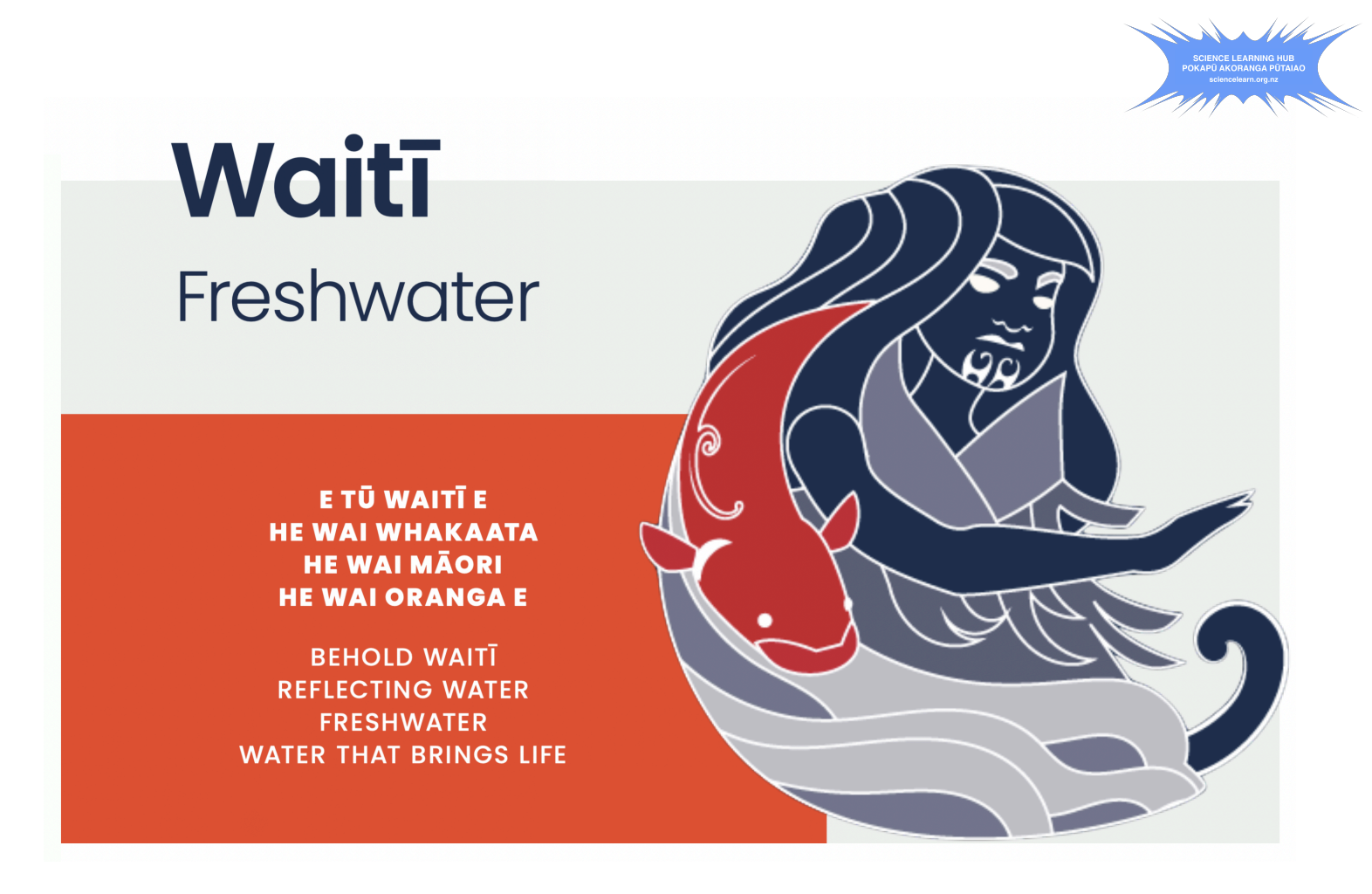
Waitī is a whetū in the Matariki cluster. It is the star connected to freshwater: springs, streams, rivers, lakes, wetlands and the plants and animals that live in freshwater.

Waitā is a whetū in the Matariki cluster. It is the star connected with the oceans and marine conditions and represents the many types of food gathered from the sea.


Friday, 18 August 2023

Matariki, Pōhutukawa and Hiwa-i-te-rangi

The three stars we are learning about is:
Matariki, Pōhutukawa, and Hiwa-i-te-rangi.

  • We learned that the Matariki star cluster is visible in other countries too. They just have a different name.
  • Matariki is known by many other names around the world, such as:
    • Pleiades (Greek and English speaking countries) 

    • Seven Sisters (Greek mythology) 

    • Messier 45 (Croatia) 

    • M45

    • Krittika (India) 

    • Subaru (Japan)

    • Mao; The Hairy Head of the White Tiger (China)

    • Mul Mul (Babylonian)

    • Freyja’s Hends (Norse mythology the Vikings

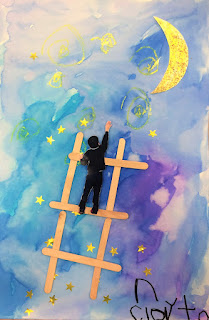
We learned about the mum star and decide to link it to a whakataukī : 

Tukua kia tu takitahi nga whetu o te Rangi
Let each star in the sky shine it’s own light

Look at our beautiful art!!
Georgia O'Keeffe Ladder to the Moon art lesson for kids - Leah Newton Art

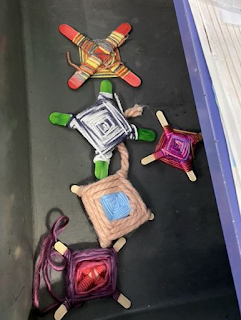
We have learnt that the star in the cluster of Matariki named Pohutukawa represents those who have passed away. At Matariki we remember them. This is what we have made to remember our loved ones. Weaving stars.


Hiwa-i-te-Rangi is the youngest star in the Matariki cluster.

Hiwa-i-te-rangi is the star that is connected to the promise of a prosperous season. It is also known as the wishing star. Māori traditionally would use this star to set their desires and dreams for the year, commonly known now as New Year’s resolutions.
You can look upon this star to set goals and resolutions for the year to come.

We made a wishing tree and everyone wrote their wishes on the tree. 


Wednesday, 2 August 2023

Exploring the Stars: Matariki-inspired Star Patterns

 Stars have always fascinated humans with their twinkling beauty in the night sky. For generations, people from various cultures have looked up to the stars for guidance, inspiration, and storytelling. In New Zealand, the Māori culture celebrates a special cluster of stars known as Matariki, which signals the start of a new year and the winter season. 

During Term 3 will explore the Matariki star cluster, its cultural significance, and how we can use it as a foundation for teaching and learning. We'll also share a fun activity of creating star patterns and extending them further, allowing young minds to engage with math and cultural awareness.

For the Māori people, Matariki holds immense cultural significance. It's a time for reflection, celebration, and connecting with the land and community. During this time, families come together, share stories, sing songs, and learn about their ancestors and traditions.

Matariki offers a rich platform enabling young learners to explore multiple facets of learning.

Mathematical Thinking: Creating star patterns involves spatial reasoning and geometry. Students can experiment with shapes, sizes, and angles while developing problem-solving skills.

Creativity: Students can express their creativity by designing unique star patterns, enhancing their fine motor skills and imagination.

Creating Matariki-inspired Star Patterns

Materials Needed: Geometrical shapes

While they work on their star patterns, discuss the shapes they are creating (e.g., triangles, squares, pentagons) and how these shapes relate to the stars in the night sky. How can you extend the pattern further?

Finally, students share their star patterns, talk about what they learned.

As educators and parents, let's continue to inspire our youngest learners to reach for the stars, both in the sky and in their quest for knowledge and understanding. Happy Matariki!


This little learner struggled with the more structured learning environment, he often does not participate in learning activities. Celebration time!!! He participated and did an amazing job!!
So proud of him - just goes to show the importance of hands-on activities and learning through play is.


Friday, 21 July 2023

Hua Whenua for Matariki


A warming and inviting way to bring family and friends together to celebrate this very special date.

For generations, the Māori have relied on Matariki to plan their harvests. During this season, a cherished tradition is to come together and enjoy lovingly prepared kai (food) with our whānau (family), friends, and community.

Hua Whenua, also known as Friendship Soup, is a fantastic choice because everyone pitches in with ingredients from their pantry, fridge, or vegetable garden to create a large pot of hot, nourishing soup. Children can join in by helping gather and prepare the ingredients, which offers many opportunities to learn about Māori culture and taking care of Papatūānuku (the Earth mother).

In our version of Hua Whenua we went to our school garden to see what was ready to harvest: we found celery, kumura and some fresh herbs. We also invited everyone to bring a vegetable from home. While making the soup, we made sure to save all our vegetable peelings to feed them to our worms. This helps our vegetables grow better and tastier, and it reduces waste that would otherwise go to the landfill.

Harvesting our veggies
Let's see if we have everything for our soup?

  
We helped to peel all the veggies


Yummy, all done!!
Dished up and ready to eat!!


Perfect for the cold day!


Since Matariki is closely linked to Ranginui (the Sky father) and the stars, next time we will make tasty star-shaped croutons with cheese and herbs to accompany our soup. 


We used the Matariki Soup recipe from Twinkl.


Monday, 17 July 2023

Matariki overview Learning Slides

Make Matariki shine | CareforKids.co.nz
Introduction

Matariki, the Māori New Year, is a significant cultural celebration in New Zealand. It is a time to reflect, celebrate, and learn about the stars, nature, and Māori traditions. Incorporating Matariki into the curriculum for young learners, specifically Year 0-2 students, can be an enriching experience. In this blog post, we will explore how Matariki learning slides can be used to engaging "Learn, Create, Share" activities.

Why Matariki for Year 0-2 Students?

Matariki offers a unique opportunity to connect children with the natural world and Māori culture. Year 0-2 students are at a crucial developmental stage where they are curious, receptive to new concepts, and eager to engage in hands-on learning experiences. By integrating Matariki into their curriculum, we can foster a love for learning, build cultural understanding, and develop essential skills.

Matariki Learning Slides

Matariki learning slides are digital or printable resources that can be tailored to the specific needs of Year 0-2 students. These slides can include information about the Matariki star cluster.


Wednesday, 28 June 2023

Celebration time with our Science Showcase

At GTS, we're all about making learning exciting and hands-on. This term our focus during LEARN CREATE SHARE was Science, our students got to choose what they wanted to learn about in: (material world)stuff in our world, (physical world)things that move, or living things. What they did with their choices was nothing short of amazing!

We decided to show off our students' hard work with a Science Showcase, and guess what? Loads of whanau came.


It was a big surprise for us, but it shows just how much they care about their child's learning.

Living world - looking at invertebrates like jellyfish - they have no bones!!


Volcano on a lemon??

Material world - it's all about mixing stuff together and see what happens - the WHY?


Our students were like little scientists, showing off what they'd learned with big smiles on their faces. Everyone was so proud.

Physical world - making things move and how can we make it faster or slower. Newton's cradle - this was a very big challenge,  but we persevered and got it in the end!! A few burned fingers from the hot glue gun, but the outcome was mazing!!


Magnet fun - even a bit of magic!!

Doing art with magnets - who would have thought!?

Simple machines - making a ramp for our car we created that can really move!!


Floating - scenario was set. We have a ship and it crashed into some rocks. The ship sank. The people are safe on the island but now we have to make a boat that will float to get the people safely home - what are we going to do. What makes a boat float? It's all about the shape and the load!!!

What made this showcase special was how much everyone loved it. Whanau couldn't stop saying nice things about our teachers and students. We believe in teaching in a fun way that helps all learners. We want to make sure learning is exciting for everyone.


Let's look at our bones - we made a spine!! 

Our hands can move - each little bit of our fingers moved just like a real hand!


We don't do science like you might think. No boring lectures here! Our students get their hands dirty, because learning is messy, and have a blast doing it. They learned about cool stuff like chemicals mixing together, how things move and the wonders of nature. Every moment was a chance to learn and have fun. We are all about failures too - if we try to create and it doesn't work the first time, we can reflect and make it better.

Our students were so excited and curious. They looked like future scientists, engineers, and nature lovers. But most importantly, they looked like children who love learning and exploring.

In a world that can sometimes be confusing, it's great to know our children are getting ready to take on any challenge. The Science Showcase wasn't just about what they learned this term. It was about showing their incredible potential.

We're excited for the future and can't wait to see where their curiosity takes them. Thanks to all the whanau for their support, and congrats to our fantastic students. Together, we're making the future a little brighter and a lot more curious!


Monday, 5 June 2023

Manaiakalani Create Workshop 2 June 2023

We recently conducted a creative workshop led by our incredible Team Koru, and the experience was truly rewarding. 
The positive feedback we received from the participants was overwhelming and inspiring. They appreciated our innovative approach and unique perspective, which allowed them to explore their creative potential in a supportive environment. 
Many participants were intrigued by our practice and asked insightful questions about our methods, techniques, and the philosophy behind our work. It was gratifying to witness how our hard work and collaborative efforts were clearly evident to those observing from the outside. 
Knowing that our dedication and passion resonated with others reaffirmed our belief in the power of creativity and reinforced our commitment to fostering a vibrant and inclusive creative community.

Please have a look at our amazing slides.

Sunday, 30 April 2023

Learn Create Share Model

Learn Create Share Model Link : Please make a copy and share
Learn create share is a teaching methodology that encourages students to actively engage in the learning process by creating and sharing their own projects and ideas. 
It is a student-centered approach that emphasises hands-on learning, collaboration, and creativity. The idea behind this approach is that when students are given the freedom to explore topics that interest them and are encouraged to take ownership of their learning, they are more likely to be motivated and engaged in the process.

The Learn create share model typically involves three main steps:
Learn: In this step, students are introduced to a new concept or topic. They might watch a video, read a text, or listen to a lesson to gain a basic understanding of the topic.
I have some key words to help the students out when starting their inquiry: I see, I think, I wonder, I explore, I investigate and I gather.  
Create: In this step, students are given the opportunity to apply what they have learned by creating something related to the topic. I will give my students freedom to choose how they want to create from what they have learned. This could be a project, a model, art, or anything else that allows them to demonstrate their understanding.
Share: In this step, students share their creations with others, whether it's their classmates, their teacher, or a wider audience. Sharing their work allows them to receive feedback, refine their ideas, and learn from others.

Overall, the Learn create share model encourages students to become active participants in their own learning and to develop critical thinking, communication, and collaboration skills.

I have created a model I want to try out with my Year 1 students. One of our focusses since last year is Student Agency and how we are educators can give our students the best opportunities to learn. This term I will work from this model so that my students can get use to the look and how to use it. Term 3 I will give them the opportunity to access this model and find their learning on the model. I created QR codes as a great tool to providing students with access to additional resources and information related to the topic they are studying. For example, I created QR codes that links to my slides that I will be using during my floatation lessons. QR codes will be used for videos, interactive activities, or websites that provide more information or examples related to the topic we will study. By scanning the QR codes, students can explore these resources independently and at their own pace, which can help them develop self-directed learning skills. Additionally, QR codes can link to instructions or tutorials for specific activities or projects, which can help students work independently and develop their creativity and problem-solving skills.

I am excited to start this with my students this week during our Science topic.

Can't wait to share my students' learning with you!! 

About me

KPMG Hui – Preparing to Share My MIT Journey

It was great to be back at KPMG today and to catch up with the MIT crew. A big thank you to Justine and KPMG for once again welcoming us int...