Matariki, Pōhutukawa and Hiwa-i-te-rangi

The three stars we are learning about is:
Matariki, Pōhutukawa, and Hiwa-i-te-rangi.

  • We learned that the Matariki star cluster is visible in other countries too. They just have a different name.
  • Matariki is known by many other names around the world, such as:
    • Pleiades (Greek and English speaking countries) 

    • Seven Sisters (Greek mythology) 

    • Messier 45 (Croatia) 

    • M45

    • Krittika (India) 

    • Subaru (Japan)

    • Mao; The Hairy Head of the White Tiger (China)

    • Mul Mul (Babylonian)

    • Freyja’s Hends (Norse mythology the Vikings

We learned about the mum star and decide to link it to a whakataukī : 

Tukua kia tu takitahi nga whetu o te Rangi
Let each star in the sky shine it’s own light

Look at our beautiful art!!
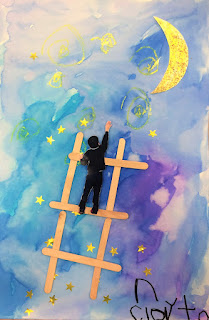
Georgia O'Keeffe Ladder to the Moon art lesson for kids - Leah Newton Art

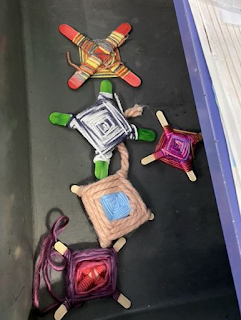
We have learnt that the star in the cluster of Matariki named Pohutukawa represents those who have passed away. At Matariki we remember them. This is what we have made to remember our loved ones. Weaving stars.


Hiwa-i-te-Rangi is the youngest star in the Matariki cluster.

Hiwa-i-te-rangi is the star that is connected to the promise of a prosperous season. It is also known as the wishing star. Māori traditionally would use this star to set their desires and dreams for the year, commonly known now as New Year’s resolutions.
You can look upon this star to set goals and resolutions for the year to come.

We made a wishing tree and everyone wrote their wishes on the tree. 


Comments

Popular posts from this blog

The Syntax Project - NZ version that aligns with our curriculum

I found this on Facebook this morning. I am so excited to share this amazing resource with teachers  This was the message by Sarah Peck on the Primary teachers page: Kia ora koutou, not sure how many of you use the Syntax Project for a sentence-level writing resource but here is the scope and sequence with NZ Year level equivalents added. All of the slideshow resources that support the scope and sequence can be found at https://ochre.org.au/ac/the-grammar-project/. You will need to register for (free) access. The materials are designed for NZ Year 0 (NE) to Year 7, however I think if you have older struggling learners that still need sentence level writing teaching, learning, review and practice then you'd potentially still get a lot out of what's on offer. The Syntax Project work has been developed by Australian teachers, for teachers, and is underpinned by work from The Writing Revolution, and the Morphology Project references William Van Cleave's work. Here is the link: ...

Impressive Writing Growth with The Syntax Project

I’ve seen remarkable progress in my students’ writing skills since introducing The Syntax Project . This free, accessible platform, grounded in the concept of colourful semantics, has been a game-changer for our young learners. What is Colourful Semantics? Colourful semantics is a method that breaks sentences down into parts, each represented by a different colour. For instance, the "Who" (subject) could be one colour, while "What doing" (the verb) is another. This visual approach makes sentence building more straightforward and fun for children, helping them better understand sentence structure. It’s especially useful for younger students as they get to grips with the basics of grammar and sentence creation. My Approach to Using the Syntax Project I began using the Syntax Project by focusing on oral exercises. Students first talk through sentences, identifying key parts like who is doing what, and where it’s happening. This has laid a strong foundation for understa...

Helping Our Tamariki with b/d Confusion: Strategies That Work

As part of my ongoing teaching inquiry into how we support early literacy—especially for those tamariki who need a bit more time—I came across this really helpful article from All About Learning Press that offers clear, simple strategies to help children who confuse b and d. Let’s be honest—this is super common and very normal for our 5- and 6-year-olds. But for some, it sticks around longer and can start to impact confidence, writing fluency, and reading accuracy. What’s in the Article? The blog post outlines: Why letter reversals are a developmental stage, not a sign of dyslexia on their own. Fun, hands-on strategies to help children lock in correct b/d formation. Practical tools that both ECE and NE teachers can easily integrate into their day. One of my favourites from the list is the “bed” trick—using both hands to form the shape of a bed (with thumbs up) to remind kids that b comes before d. It's kinaesthetic, memorable, and easy to teach. Another great one is using visual m...