Thursday, 19 October 2023

Reflection on Teacher Questionnaire - What are the main challenges and how can we overcome them?

Let's look at what our teachers are saying -  this will determine the direction we will pursue to make transitions easier on our children. 

Next step - collaboration meeting - WHAT CAN WE DO?

What are some common challenges you've seen in students who are just starting school?

  • Inconsistent transition to school from ECE centers is a challenge.
  • Lack of a clear guide for children and their families regarding what to expect when starting school.
  • Pre-visits to the classroom, meeting teachers, and understanding the school environment are not consistently provided.
  • Building familiarity and relationships with teachers and peers is crucial for a positive school start.
  • Establishing connections with families during visits helps set children up for success.
  • Insights from these visits can be used to support children and remove potential barriers.
  • Going out to play in a large school environment can be daunting, even when with friends.
  • Children may lack basic skills like using a pencil, dressing themselves, or following instructions.
  • Some children may exhibit a self-centered focus and speech difficulties.
What are the biggest academic challenges that students face when they start primary school?
  • Major academic challenges observed include low vocabulary and phonological awareness.
  • Significant difficulty in writing, with some children still struggling to write a basic sentence even after two terms.
  • Writing and fine motor skills are lacking in many tamariki.
  • Limited exposure to reading; some children have not been read to or have not engaged with books, leading to difficulties in turning pages and discussing books.
  • Lack of perseverance in completing tasks is also a notable challenge.
What are some social and emotional challenges that students may face when starting primary school?
  • Increased instances of tamariki arriving at school not yet fully toilet trained due to toileting anxiety.
  • Many children are in the process of learning to regulate their emotions, which is developmentally typical at the age of 5.
  • Some children start school at the age of 6 with no prior ECE experience.
  • Challenges related to separation anxiety from their whanau.
  • Issues with not taking care of their belongings.
  • A lack of independence..
  • Difficulties during playtimes, especially when around older or bigger children.
How do you help them overcome these challenges?
  • Implement socio-emotional coaching throughout the day to support children's emotional development.
  • Seek guidance or resources to assist whanau with toileting and enrollment challenges for 6-year-old children.
  • Foster a free play environment in and out of the classroom, encouraging exploration and peer interactions.
  • Use a "magic table" or designated learning time to structure activities, balancing free play with focused learning.
  • Establish a buddy system within the classroom and on the playground to encourage peer support and inclusivity.
  • Communicate with parents about the importance of fostering independence in their children.
  • Offer praise and positive reinforcement to encourage children to take responsibility for their belongings and self-care.
What do you do to assess student entry levels?
  • Conduct formal assessments such as the Clay Observational survey and BSLA baseline assessment at school entry.
  • Informally observe children in various areas, including play, fine and gross motor skills, and social and emotional development.
  • Use a SEA checklist to assess students within their first 6 weeks of school.
  • Entry-level test around the 6-week mark to gauge their progress and development.
What are some of the most important skills or knowledge that students should have when they start school?
  • Foster curiosity and determination in students to promote learning and growth.
  • Teach self-help skills to enable children to independently manage their belongings, toileting, and hygiene.
  • Focus on developing fine motor skills to ensure children can hold a pencil and perform writing tasks.
  • Emphasise basic life skills, such as putting on shoes, as part of their overall development.
What advice would you give parents to help their child have a successful transition to school?
  • Establish a strong relationship with your child's teacher for effective communication and support.
  • Ensure your child's regular attendance at school to maintain a consistent learning routine.
  • Advocate for your child's needs and well-being, addressing any concerns promptly and asking questions when necessary.
  • Consistently prepare your child for school through visits and positive conversations about the enjoyable school experience.
  • Use pre-visits to the school to familiarise your child with the environment and create a smooth transition to formal education.
How can teachers help students who may be struggling with the transition to school?
  • Teachers should prioritise building positive relationships with tamariki and their whanau
  • Allow children time to explore their new environment before imposing strict class routines.
  • Maintain open and regular communication with parents to stay informed about the child's needs and progress.
  • Praise and encourage the child, and consider using incentives to motivate and reward positive behaviours.
  • Establish buddy systems to foster peer support and a sense of belonging among students.
What are some strategies you use to build a positive classroom environment and help students feel comfortable in the classroom?
  • Establish a predictable routine to provide structure and stability for students.
  • Cultivate a calm and supportive learning environment.
  • Offer students opportunities for making choices, promoting autonomy within limits.
  • Build and maintain positive relationships with students to enhance their well-being and engagement.
  • Incorporate games, singing, and free play to create a fun and enjoyable learning experience.
  • Ensure that a portion of the day is dedicated to activities that prioritize student happiness, safety, and a sense of value.
  • Foster a sense of whanau within the classroom, promoting a supportive and inclusive atmosphere.
  • Act as a role model for positive behavior and encourage students to follow suit.
  • Use praise and encouragement to motivate and reinforce desired behaviours.
  • Utilise a class mascot to create a sense of identity and community within the classroom.
How do you ensure that students with different learning styles and needs are supported and included in the classroom?
  • Collaborate with learners to plan and design customized learning experiences that align with their interests, needs, and abilities.
  • Provide additional support and accommodations for students who require it, ensuring an inclusive approach to learning.
  • Group students based on their abilities, with some curricula fostering mixed-ability discussions, such as in Math.
  • Develop a deep understanding of each student's unique characteristics and learning preferences.
  • Prioritise one-on-one interactions with each student to establish a strong teacher-student relationship and address individual needs.
How do you encourage students to develop a love of learning and stay engaged in the classroom?
  • Demonstrating a genuine love for learning as a teacher is essential to maintain students' interest and enthusiasm for learning.
  • Use words of praise, show enthusiasm, and be a positive role model to make learning enjoyable for tamariki.
  • Foster a positive classroom environment by modeling positive behavior and setting a constructive tone.
  • Establish high expectations for students and maintain consistency in your teaching approach.
  • Implement effective classroom routines that provide structure and predictability for students.
What resources or support systems are available for students who may need additional help or support?
  • Utilise SENCO (Special Educational Needs Coordinator) for coordinating and managing special education support in the school.
  • Provide in-class support from a Teaching Assistant (TA) when available.
  • Allocate a Learning Assistant to work with an emergent group, providing one-on-one support.
  • Access the expertise of Resource Teachers of Learning and Behaviour (RTLBs) to assist in addressing specific learning and behaviour needs.
  • Employ Teacher Aids to support the teacher and provide additional help to students with diverse learning requirements.
How do you balance academic expectations with the need for play and socialisation in primary school?
  • Implement "forced choice" strategies, allowing children to select from options tailored to their interests and needs during independent time.
  • Create a balance between play provocation and academic tasks to give children the freedom to choose how they spend their time.
  • Group students into core curriculums, with some working directly with the teacher and others exploring different stations.
  • Establish a structured routine for rotating students between activities to maximise learning opportunities
  • Incorporate developmental play sessions into the weekly schedule to support holistic child development.

Thursday, 14 September 2023

Creating Collaborative and Decodable Sentences

Creating Collaborative and Decodable Sentences with Word Cards and Picture Prompts

Language development is a vital skill that forms the foundation of effective communication. Encouraging collaborative learning in language development can make the process engaging and enjoyable for learners of all ages. One effective way to foster collaboration and enhance language skills is through the use of word cards and picture prompts. In this blog post, we'll explore how to create collaborative, decodable sentences using these tools and how to take the learning process to the next level by publishing the sentences on paper.

Why do collaborative learning matters?
Collaborative learning is more than just working together; it's about engaging learners in a shared experience that enhances their understanding and skills. When it comes to language development, collaboration can:

  1. Enhance Comprehension: Collaborative activities encourage learners to actively engage with language, which leads to better comprehension.
  2. Boost Vocabulary: Interacting with peers exposes learners to a wider range of vocabulary and language patterns.
  3. Spark Creativity: Working together often leads to innovative and imaginative ideas
  4. Picture Prompts: Use pictures or drawings related to the words on the cards. These visuals help learners connect words with their meanings and make the activity more engaging.
  5. Sentence Building: Encourage students to work together to create sentences using the word cards and picture prompts. The sentences should relate to the images.
  6. Discussion: After creating sentences, have each student copy the sentence on a whiteboard - edit, and then they can publish in their books or on a publishing paper. 
Decodable Sentences for Early Learners

For early learners, it's essential to create decodable sentences, which means the sentences are constructed using words with phonetic patterns that learners have been taught. This reinforces their reading skills. Here's how to do it:
  • Phonetic Word Cards: Create word cards that contain words with the phonetic patterns your learners are focusing on.
  • Picture Prompts: Use images that represent the words on the word cards, emphasising the sounds and letters being learned.
  • Guided Building: Provide guidance to learners by suggesting a few word cards to start with.
  • Building Sentences: Encourage learners to build sentences using the suggested word cards and picture prompts, ensuring that the sentences are phonetically decodable.
Publishing on Whiteboards

To take this collaborative activity to the next level and make it more memorable, consider publishing the sentences on whiteboards:

  1. Recording Sentences: Have each group write their collaborative sentence on a whiteboard.
  2. Presentation: Groups can take turns presenting their sentences to the class. This helps build confidence and communication skills.
  3. Interactive Editing: After each presentation, engage the class in interactive editing. Discuss sentence structure, grammar, and pronunciation.
  4. Permanent Display: Keep the whiteboard sentences on display in the classroom for reinforcement and as a visual reference. Rewindable learning.


Friday, 25 August 2023

Waiti and Waita

 Waitī & Waitā

Waitī is a whetū in the Matariki cluster. It is the star connected to freshwater: springs, streams, rivers, lakes, wetlands and the plants and animals that live in freshwater.

Waitā is a whetū in the Matariki cluster. It is the star connected with the oceans and marine conditions and represents the many types of food gathered from the sea.


Friday, 18 August 2023

Matariki, Pōhutukawa and Hiwa-i-te-rangi

The three stars we are learning about is:
Matariki, Pōhutukawa, and Hiwa-i-te-rangi.

  • We learned that the Matariki star cluster is visible in other countries too. They just have a different name.
  • Matariki is known by many other names around the world, such as:
    • Pleiades (Greek and English speaking countries) 

    • Seven Sisters (Greek mythology) 

    • Messier 45 (Croatia) 

    • M45

    • Krittika (India) 

    • Subaru (Japan)

    • Mao; The Hairy Head of the White Tiger (China)

    • Mul Mul (Babylonian)

    • Freyja’s Hends (Norse mythology the Vikings

We learned about the mum star and decide to link it to a whakataukī : 

Tukua kia tu takitahi nga whetu o te Rangi
Let each star in the sky shine it’s own light

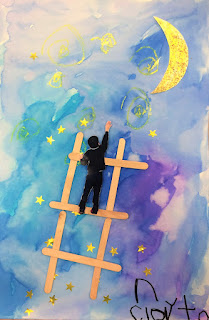
Look at our beautiful art!!
Georgia O'Keeffe Ladder to the Moon art lesson for kids - Leah Newton Art

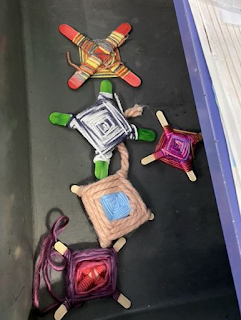
We have learnt that the star in the cluster of Matariki named Pohutukawa represents those who have passed away. At Matariki we remember them. This is what we have made to remember our loved ones. Weaving stars.


Hiwa-i-te-Rangi is the youngest star in the Matariki cluster.

Hiwa-i-te-rangi is the star that is connected to the promise of a prosperous season. It is also known as the wishing star. Māori traditionally would use this star to set their desires and dreams for the year, commonly known now as New Year’s resolutions.
You can look upon this star to set goals and resolutions for the year to come.

We made a wishing tree and everyone wrote their wishes on the tree. 


Friday, 11 August 2023

Play dough, Robots, and Sharing the Joy of Creativity

Learning all about letter Rr

Learning the alphabet can be a lot of fun, especially when you're exploring a cool letter like 'R.' We recently had a great time learning about 'R' at GTS, and here's how we did it! 

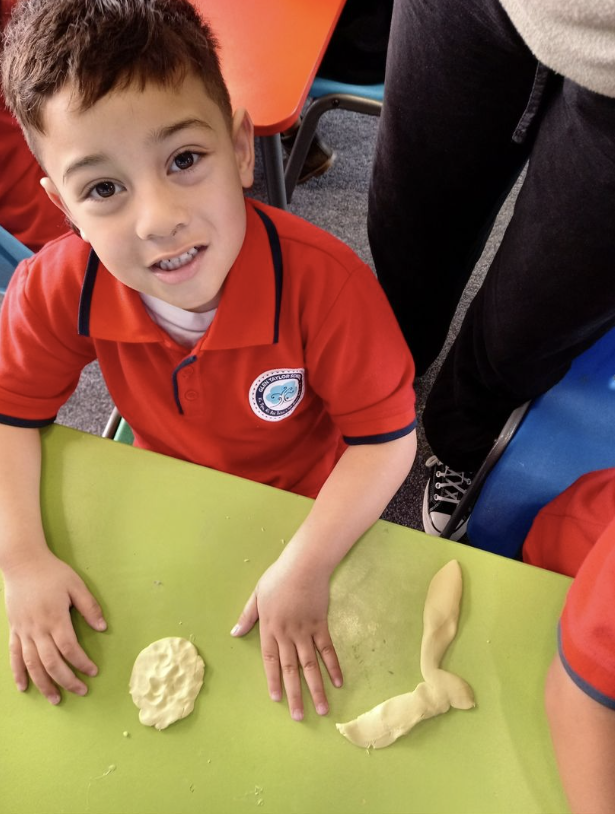
To begin our 'R' learning journey, we incorporated a hands-on approach using play dough. Play dough is not only a fantastic sensory experience but also a fantastic tool for reinforcing the shape and formation of letters. We rolled, moulded, and manipulated the play dough to create the letter 'R.' 
 This helped us understand what 'R' looks like and how to write it.


But we didn't stop there! We wanted to be super creative, so we decided to make robots using recycled stuff like old cardboard boxes, bottle caps, and a variety of other recycled materials. It was like a big arts and crafts project. Each robot we made had something special about it.

After we finished making our unique robots, we wanted to show them off to everyone in our school. So, we had a little walking exhibition where we displayed our cool robots to each class. It was awesome to see how different and creative our robots turned out to be.

Perhaps the most heartwarming part of this journey was the involvement of our senior students.  Their genuine interest in the projects, the thoughtful questions they asked, and the encouragement they provided made the little ones feel like amazing artists. 

In the end, learning 'R' was not just about reading and writing. It was about having fun with play dough, using our imaginations to create robots, and sharing our creativity with others. Learning can be exciting when we get to be creative and share with friends. The letter 'R' is now our favourite letter!


Wednesday, 2 August 2023

Exploring the Stars: Matariki-inspired Star Patterns

 Stars have always fascinated humans with their twinkling beauty in the night sky. For generations, people from various cultures have looked up to the stars for guidance, inspiration, and storytelling. In New Zealand, the Māori culture celebrates a special cluster of stars known as Matariki, which signals the start of a new year and the winter season. 

During Term 3 will explore the Matariki star cluster, its cultural significance, and how we can use it as a foundation for teaching and learning. We'll also share a fun activity of creating star patterns and extending them further, allowing young minds to engage with math and cultural awareness.

For the Māori people, Matariki holds immense cultural significance. It's a time for reflection, celebration, and connecting with the land and community. During this time, families come together, share stories, sing songs, and learn about their ancestors and traditions.

Matariki offers a rich platform enabling young learners to explore multiple facets of learning.

Mathematical Thinking: Creating star patterns involves spatial reasoning and geometry. Students can experiment with shapes, sizes, and angles while developing problem-solving skills.

Creativity: Students can express their creativity by designing unique star patterns, enhancing their fine motor skills and imagination.

Creating Matariki-inspired Star Patterns

Materials Needed: Geometrical shapes

While they work on their star patterns, discuss the shapes they are creating (e.g., triangles, squares, pentagons) and how these shapes relate to the stars in the night sky. How can you extend the pattern further?

Finally, students share their star patterns, talk about what they learned.

As educators and parents, let's continue to inspire our youngest learners to reach for the stars, both in the sky and in their quest for knowledge and understanding. Happy Matariki!


This little learner struggled with the more structured learning environment, he often does not participate in learning activities. Celebration time!!! He participated and did an amazing job!!
So proud of him - just goes to show the importance of hands-on activities and learning through play is.


Thursday, 27 July 2023

Parent Survey 2023 link to form


Here is the link to the Google Form I created for my parents: Parent Survey Editable Form
The questionnaire aimed to gather information about a child's transition to primary school. Respondents provided insights into their child's preferences, concerns, expectations, and the support they plan to provide. 
Here are the key findings:

Activities at home: The children enjoy a range of activities such as playing games, helping out, writing, drawing, exploring outside, arts and crafts, playing with siblings, imaginative role play games, puzzles, and reading.

Upsetting factors: The children may be upset by not getting their way, conflicts with other children, feeling put down, not being listened to or understood, someone ruining their work, and not keeping promises.

Response to transitioning: Most of the children responded positively, being excited and looking forward to starting school. One child engaged in role-playing school scenarios at home to prepare for the transition.

Desired learning outcomes: The parents expressed hopes for their child to acquire various skills, including academic skills (reading, writing, math), social-emotional skills (relating with others, making friends), life skills (practical skills, time management), and discovering personal interests and passions.

Parental support: The parents intend to support their child during the transition by being available, providing love, encouragement, and support, reminding them to have fun, be kind, and try their best. Most respondents felt their child was transitioning well, but one expressed concern about absences due to illness.

Awareness of school visits: Three-quarters of the respondents were aware of school visits before the child starts primary school, indicating potential engagement in those events.

Interest in home support information: Respondents were divided on whether they wanted information on how to assist their child at home, with an equal number expressing interest and disinterest.

Overall, the questionnaire shed light on children's interests, concerns, and parents' aspirations and support strategies during their transition to primary school.

About me

KPMG Hui – Preparing to Share My MIT Journey

It was great to be back at KPMG today and to catch up with the MIT crew. A big thank you to Justine and KPMG for once again welcoming us int...